
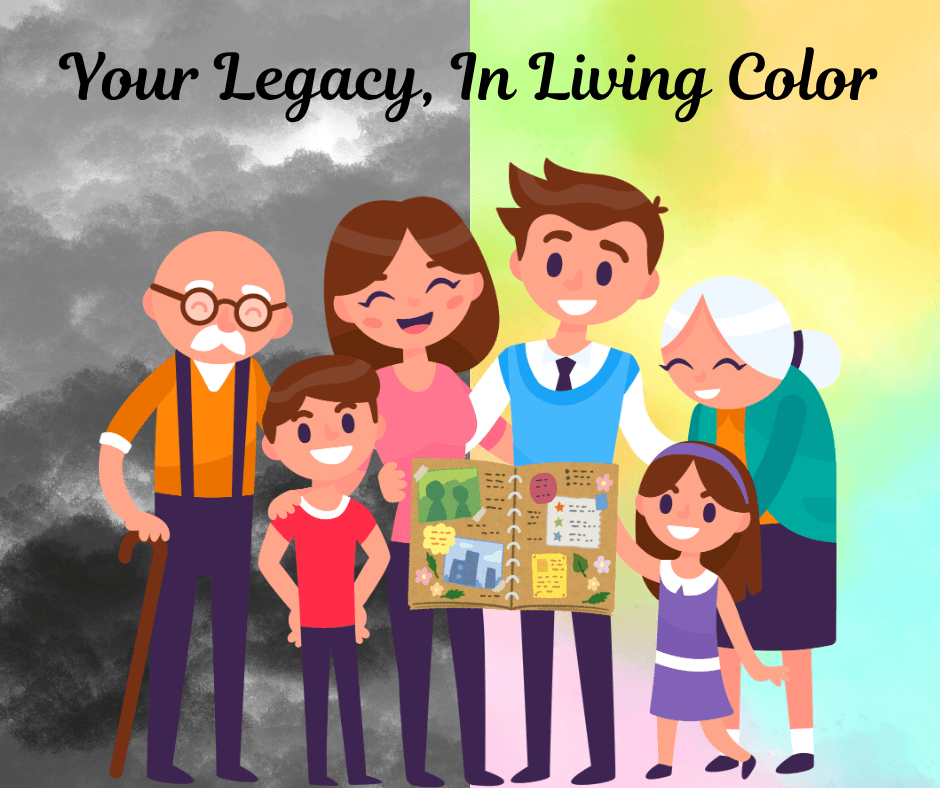
 There is a famous scene in The Wizard of Oz where Dorothy steps into the magical Land of Oz and is transported from a black-and-white world to a Technicolor one.
The phrase in living color originates from TV and film advertising in the mid-20th century, when black-and-white imagery was standard and color television was a novelty. It represented something more vibrant and lifelike: Viewers were seeing real people rendered in natural color, often for the first time.
What started as a literal description of color TV technology has transformed into a cultural idiom for expressive and authentic portrayal. That shift can also apply to your estate plan, taking it from a purely formal black-and-white documentation process to a more vibrant representation of your life in its varied hues and tones.
There are many ways to add color to your estate plan—ways that help paint a true-to-life picture of who you are within the standard planning canvas.
Estate Planning Can Let You Show Your True Colors
What is the first thing you think of when you hear the term estate planning?
It may be paperwork or attorney meetings mixed with a fair amount of legalese and difficult decisions like who should receive what, who should be in charge, equal versus fair inheritance shares, and end-of-life preferences.
Estate planning does involve all these things, expressed through documents such as wills, trusts, powers of attorney, and advance medical directives. But estate planning is also much more than that.
Here are several ways you can start to color in your estate plan, moving beyond a black-and-white collection of documents to a more expressive representation of who you are in your many roles as a family member, a friend, a philanthropist, and the artist behind your legacy.
1. Philanthropic Passions: Generous Brushstrokes That Build Shape and Texture
Charitable giving can provide financial benefits, including potential tax advantages. But for most people, its purpose runs deeper: It is an expression of identity, gratitude, and personal beliefs. Philanthropy allows your estate plan to reflect what matters to you beyond your immediate loved ones, including the causes you support, the communities you care about, and the values you hope to encourage for future generations.
How philanthropic planning works:
- Often incorporated through bequests in a will or a trust
- May involve charitable trusts, donor-advised funds, or direct gifts
- Can be structured during life, at death, or across generations
- Often coordinated with broader financial and tax planning goals
How philanthropy adds color to an estate plan:
- Translates personal values into lasting impact
- Tells beneficiaries what you stood for, not just what you owned
- Creates a sense of continuity between generations
- Offers a shared purpose that can bring families together
Donations large enough to earn a named building or library wing are beyond most people’s gifting budget. However, even modest charitable provisions can build texture and depth into an estate plan by showing how your values extend beyond the frame of family and finances. They serve as subtle accent colors that draw the eye inward and give a plan dimension.
2. Sentimental Items: Smaller Strokes That Show Personality
Not everything that matters in an estate plan is measurable in dollars. Personal belongings—jewelry, artwork, letters, heirloom quilts, collections, photo albums, or other meaningful everyday objects—can carry emotional weight that far exceeds their financial value. These items help tell stories, reflect relationships, and preserve memories in ways formal documents and financial accounts cannot.
How planning for sentimental items works:
- Items can be addressed through a personal property memorandum referenced in estate planning documents
- Instructions may be updated over time without changing core estate documents
- Preferences can account for emotional significance that transcends monetary value
- Conversations with family can strengthen written guidance to avoid misunderstandings
How sentimental items add color to an estate plan:
- Highlight relationships and shared history that numbers cannot capture
- Reduce conflict over sentimental items by clarifying your intentions in advance
- Keep alive family stories attached to specific objects
- Allow meaning to live beside ownership
3. Family Conversations: Paint the Full Picture in Words
Even the most thoughtful and vibrant estate plan can appear flat if the people it affects are not part of a bigger discussion that makes the context clear. Family conversations are where your vision becomes visible, giving loved ones insight into your values, priorities, and reasoning before those ideas are filtered through documents, emotions, or assumptions.
How family conversations about your estate plan work:
- Can take place gradually rather than all at once
- Focus on values and intentions, not mere dollar amounts
- Usually include spouses, adult children, fiduciaries, or other key decision-makers
- May coincide with planning milestones or life transitions
How family conversations add color to an estate plan:
- Reveal the motivations behind decisions that may otherwise surprise or confuse loved ones
- Reduce misinterpretation and resentment by setting expectations early
- Help loved ones see your plan as intentional and not arbitrary
- Build trust by sharing perspective as well as intended outcomes
You do not need to present a finished masterpiece to start these conversations. Simply sharing rough sketches, such as what matters to you, what you hope to pass on, and what you want to avoid, can bring the bigger picture into focus. Family conversations are the “director’s cut” of your estate plan: the narrative that allows others to see what went into the production.
4. Living Legacy Projects and Other Ways to Paint an Estate Plan
Every aspect of a legacy does not need to be captured in legal documents or even the nonlegal documents that accompany them. Some of the most meaningful expressions of legacy are created alongside the estate plan rather than inside it. Family legacy projects are a way to preserve stories and experiences that do not neatly fit into formal planning but may matter just as much.
How legacy projects work:
- Created or co-created during life with family members
- May exist in digital, written, audio, or visual formats
- Can be shared informally or referenced in estate planning documents
- Able to evolve over time; do not have to be completed all at once
Examples include recorded video interviews with family members, digital scrapbooks or photo archives for online sharing, illustrated family trees, or “story maps” that trace ancestors’ migration from other parts of the world. Families may also create music playlists, recipe collections, or written reflections that capture traditions, identity, and special everyday moments that pass quietly between major milestones.
How legacy projects add color to an estate plan:
- Incorporate voices, stories, and perspectives that legal documents cannot express
- Create connection across generations that complements asset distributions
- Invite loved ones to participate in shaping the legacy together
- Turn memories into something tangible, shareable, and enduring
Legacy projects can function like an informational placard placed in front of your finished work or a pamphlet visitors take home. They help explain what others are seeing and make the process feel more inclusive. A legacy project may be the last part of your plan, created after the paperwork is signed and filed, but it could have the greatest emotional impact.
If you are feeling like Dorothy stuck in a black-and-white world, an estate planning lawyer can help you step into Technicolor and express your legacy with your own unmistakable artistic stamp.
Posted in: Estate Planning, Legacy